
Dialectical Behavior Therapy (DBT) in Scottsdale, AZ
When Reactions Happen Fast, Skills Create Space to Respond
DBT is designed to help you pause in real time, navigate intense moments, and respond with greater clarity, control, and follow-through.
Impact Minds provides Dialectical Behavior Therapy designed to strengthen regulation, build practical skills, and support more consistent real-world application.
Licensed Clinical Team • Research-supported therapeutic approaches (including DBT) • Resilience-Based Model (an internally developed framework) • Insurance Accepted
Cognitive Behavioral Therapy
WHAT IS DIALECTICAL BEHAVIOR THERAPY (DBT)?
Dialectical Behavior Therapy (DBT) is a structured psychotherapy approach supported by clinical research that focuses on building skills for emotional regulation, distress tolerance, interpersonal effectiveness, and present-moment awareness.
Many individuals searching for DBT therapy in Scottsdale, AZ are looking for structured skills that can be applied in real-life situations.
It is common to notice that reactions can happen quickly, often before there is time to think through a response, even when there is a desire to respond differently.
Over time, understanding reactions alone may not be enough, and applying skills in real situations can remain difficult without structured practice.
DBT is designed to provide clear, repeatable skills that can be practiced and applied across situations.
With regular practice, these skills can begin to carry into daily life over time.
DBT is not about eliminating emotion. It is about strengthening the ability to experience emotion and respond with intention.
Process 01
Patterns are identified.
Process 02
Alternatives are introduced.
Process 03
Responses are practiced.
Process 04
Over time, practice may help those responses become more accessible when they are needed.
Methodology
HOW DBT WORKS
DBT focuses on learning, practicing, and reinforcing specific skills across four core areas.
This creates a process where skills are applied during real situations, not only discussed.
For example, a skill practiced in session may later be used during a stressful interaction, helping create space to pause and choose a different response.
DBT skills are designed to be practiced repeatedly between sessions and in real-world situations so they become easier to access during stressful moments.
These skills are designed to be used in real time, especially during moments when reactions feel immediate or overwhelming.
Over time, repeated application may support steadier responses and more reliable follow-through.
Completing skill-based responses may help reinforce the understanding that different actions can lead to different outcomes, supporting more stable patterns over time.
COMMON DBT SKILLS
Completing skill-based responses may help reinforce the understanding that different actions can lead to different outcomes, supporting more stable patterns over time.
Who DBT Is Designed For
Treatment recommendations are individualized based on symptom severity, functioning, goals, safety considerations, and level of support needed.
Early sessions build awareness. Later sessions focus on application. Practice between sessions plays an important role.
It is also commonly used within structured programs such as the Intensive Outpatient Program (IOP) or the Partial Hospitalization Program (PHP) when more support and repetition are needed.
Explore how DBT fits within our broader Programs structure.
DBT can support individuals experiencing:
Intense or rapidly shifting emotional responses
Difficulty managing reactions in high-stress situations
Challenges with boundaries or communication
Patterns related to anxiety, depression, trauma, ADHD, OCD, or substance use
Related Experiences
What To Expect In DBT
DBT is often applied across multiple areas. You may also find it helpful to explore:
Anxiety Treatment
Depression Treatment
Trauma Treatment
Substance Use Treatment
Cognitive Behavioral Therapy (CBT)
DBT sessions are structured to support skill-building, practice, and application. Some individuals may also practice DBT skills between sessions through structured exercises, reflection, or real-world application assignments. Practice between sessions plays an important role.
A typical session may include:
Learning a specific skill or framework
Practicing that skill in guided scenarios
Applying the skill to recent situations
Planning for real-world use between sessions
This structure helps translate learning into practical use over time.
Over time, sessions become less about learning new concepts and more about applying skills more reliably in real situations.
Conditions Supported With DBT
DBT is widely used to support patterns that benefit from structured skill-building and regulation.
Anxiety Treatment
Focus on reducing reactivity and building coping strategies.
Depression Treatment
Focus on improving engagement and follow-through.
Trauma Treatment
Focus on stabilizing responses and improving regulation.
ADHD Treatment
Focus on improving response control and consistency.
OCD Treatment
Focus on reducing reliance on repetitive responses.
Substance Use Treatment
Focus on building alternative responses during high-risk moments.
Benefits
How DBT Supports Progress
Progress develops through repeated use.
Stronger emotional regulation
Reactions become easier to recognize and manage.
More reliable responses in difficult moments
Skills can be used when they are needed most.
Improved communication and boundaries
Interactions become clearer and more intentional.
Reduced escalation during stress
Situations are less likely to intensify quickly.
Greater steadiness in daily life
Experiences feel more manageable and predictable.
More clarity during challenging situations
Decisions feel easier to navigate without becoming overwhelming.
Skills matter most in the moments they are hardest to access. Practice creates access under pressure.
Understanding does not always translate into action without repetition.
Challenges occur when:
Stress levels exceed current access to skills
Reactions occur before there is time to think
Skills have not yet been practiced enough to feel automatic
Support between sessions is limited
Friction
Why DBT Sometimes Feels Difficult
DBT is practical. It is also demanding in specific ways.
Many individuals understand the skills in session but find it difficult to use them in real time. This is common.
The Impact Way
DBT At Impact Minds
DBT at Impact Minds is integrated into a broader system designed to support regulation, steadiness, and real-world application.
DBT services are provided by licensed behavioral health professionals and supervised clinical staff in accordance with Arizona state regulations.
DBT is not only taught in sessions, but reinforced through structured skill acquisition, repeated reinforcement, and real-world implementation designed to help these skills hold in daily life.
These elements are designed to ensure that skills are not only understood, but applied more reliably over time.
This approach helps create space between reaction and response, allowing skills to be used more effectively over time.
Resilience-based model (an internally developed framework)
Care is structured around stability, capacity, control, and ownership.
Structured application
Skills are practiced through behavioral practice and repeated use to support real-world application.
Integrated care
DBT may be integrated with psychiatric care and other supportive services when clinically appropriate.
Environment design
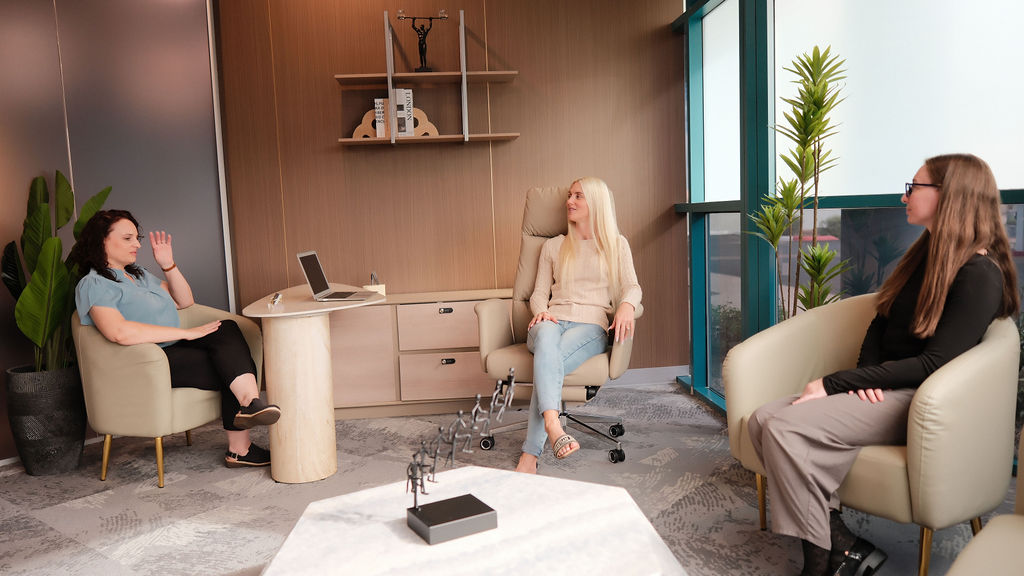
Sessions are supported by environments designed to support focus, engagement, and skills generalization across settings.
Support Tiers
DBT Within Different Levels Of Care
CBT can be provided at different levels based on need.
Outpatient Therapy
Intensive Outpatient Program (IOP)
Partial Hospitalization Program (PHP)
DBT is often incorporated into higher levels of care when increased structure, repetition, and support are clinically appropriate.
When uncertainty exists, starting with a structured level of care can help clarify what level of support is most effective over time.
Expected Outcomes
Benefits Of DBT
With regular participation, some individuals may begin to experience more steadiness and clarity in daily life.
Clearer recognition of emotional patterns
More steady decision-making
Improved problem-solving during stress
Reduced avoidance or escalation
Stronger confidence in responses
Skills are used more reliably outside of sessions.
Progress varies based on participation, stress levels, symptom severity, and
consistency of application.
Our Advantage
Why Choose Impact Minds In Scottsdale, Az
Individuals explore DBT for different reasons. Some may be looking for tools to manage intense reactions, while others are working to build more reliable responses in daily life. Loved ones and families may also be looking for clearer ways to support progress outside of sessions.
Many individuals understand their reactions, but without structured practice, those reactions tend to repeat. Skill-based support helps bridge that gap over time.
DBT focuses on building skills that can be used in moments when reactions feel immediate, helping create more space to respond with intention.
At Impact Minds, DBT is not treated as a standalone set of skills. It is part of a structured system designed to help skills translate into more consistent action in real-world situations.
Care includes structured sessions, guided skill practice, and real-world application strategies designed to support retention over time.
Licensed and experienced clinical team
Clinical expertise is combined with practical application.
Resilience-based model (an internally developed framework)
Care is structured to build stability, capacity, control, and ownership.
Structured programming
Clear frameworks reduce decision fatigue and support reliable follow-through.
Integrated care approach
Therapeutic and psychiatric services are coordinated when appropriate.
Real-world application
Skills are practiced repeatedly in daily situations, not just discussed in sessions.
Innovative environments
Structured environments are designed to support engagement, focus, and practical application beyond sessions.
Q&A
Frequently Asked Questions
Duration varies based on individual needs and consistency of application.
It may not have been applied consistently in real situations. Structure and repetition often improve application.
No. It includes structured exercises and real-world practice.
CBT involves active participation. Progress reflects consistency of practice.
Yes, including DBT, Neurofeedback, and medical care when appropriate.
CBT is commonly used for anxiety-related and OCD-related patterns. Techniques such as cognitive restructuring and Exposure and Response Prevention (ERP) may be incorporated when clinically appropriate.
Practice between sessions often includes applying skills in real-world situations, monitoring patterns, and reviewing how responses are holding over time.
CBT is one of the most researched psychotherapy approaches and is widely used across behavioral health settings.