Different therapy formats serve different roles. The right structure helps insight turn into steady action in daily life.
Designed to support awareness, strengthen relationships, and improve real-world application over time.
Licensed Clinical Team • Evidence-Based Approaches • Resilience-Based Model • Insurance Accepted
Different types of therapy are designed to support different parts of the same goal: building skills that can be used consistently in real situations.
It is common to understand patterns and still notice that progress does not carry into daily life. In many cases, this is not a lack of awareness. It is a gap between learning and application.
Individual, Group, and Family Therapy each address that gap from a different angle.
Clarity and structured problem-solving
Practicing responses in real-time interactions
Strengthening the environment where progress continues
The goal is not to choose a single option, but to use the right structure so that skills can be practiced, reinforced, and applied across different situations.
At Impact Minds, these therapy types are integrated into a system so that progress is not limited to sessions. Skills are reinforced across multiple environments, increasing the likelihood that they hold over time.
Many people understand what to do and still find it difficult to follow through in the moment. When that gap repeats, progress can feel inconsistent.
At Impact Minds, therapy is structured as a system designed to support action, not just insight.
Care is built around four pillars: stability, capacity, control, and ownership, each reinforced through structured practice across individual, group, and family settings.
An additional layer called Acceleration is introduced to support focus and engagement when applying skills feels difficult to maintain.
This process is supported through intentional environments, including movement-based engagement and sensory-integrated spaces that make it easier to apply skills in real time. This approach helps bridge the gap between understanding and consistent action in daily life.
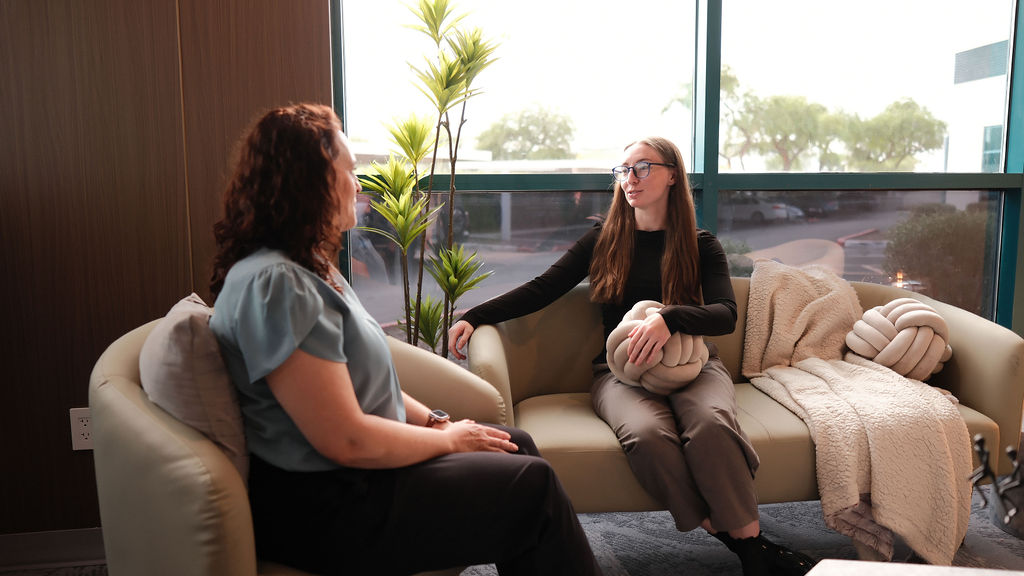
Individual Therapy provides one-on-one support focused on understanding patterns, building skills, and applying them to daily life.
This setting allows for focused attention, reduced distraction, and a structured pace that matches individual needs. Many individuals begin here when they are looking to clarify what is happening and how to respond differently.
Identifying patterns in thinking, behavior, and response
Understanding how those patterns influence daily decisions
Developing structured alternatives that can be applied in real situations
Reviewing recent situations and responses
Breaking down patterns into clear, manageable components
Practicing alternative responses in a structured way
Planning for real-world application between sessions
This environment supports depth and clarity. It allows individuals to move from awareness into structured action. Over time, Individual Therapy helps create more intentional decision-making, improved follow-through, and clearer direction in daily life.
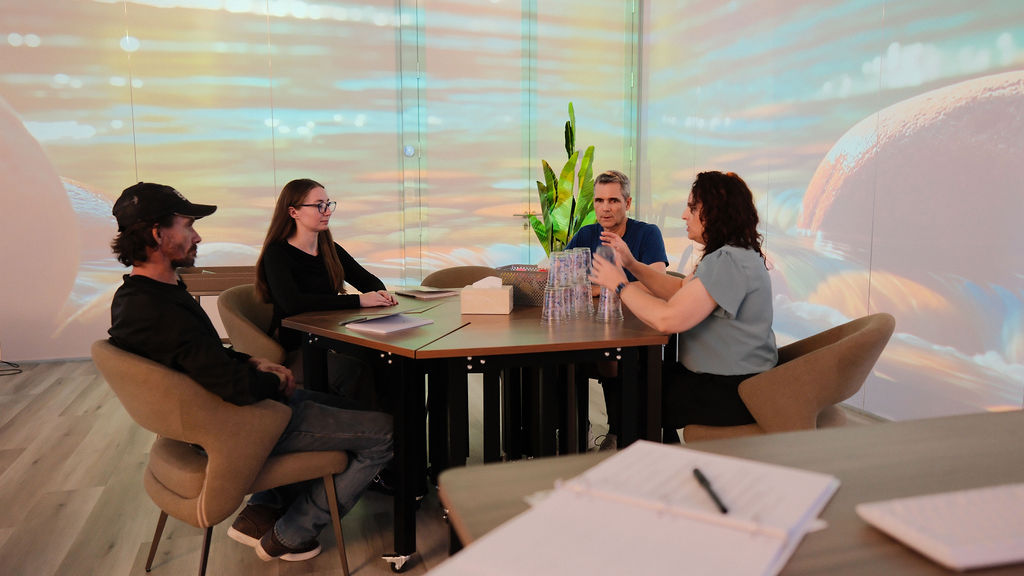
Group Therapy provides a structured setting where skills can be practiced in real-time with others.
While Individual Therapy supports understanding, Group Therapy supports application in dynamic environments where responses must happen in the moment.
Many individuals notice that applying skills becomes more difficult when other people are involved. Group Therapy is designed to address that directly.
Real-time interaction and feedback
Exposure to different perspectives and approaches
Practice of communication, boundaries, and response patterns
Guided discussions led by a clinician
Structured exercises focused on interaction and communication
Practice of specific skills in a shared environment
Reflection on responses and adjustments for future situations
This setting reduces isolation while strengthening the ability to respond effectively in social situations. Over time, Group Therapy supports more natural communication, improved confidence, and more reliable responses in everyday interactions.
Family Therapy focuses on strengthening the environment outside of sessions. In many cases, progress is influenced not only by individual effort, but by how others respond, support, and reinforce that progress.
Family Therapy creates a structured space where communication, expectations, and responses can become more consistent.
Clear and effective communication
Consistent expectations and boundaries
Alignment around progress and challenges
Identifying patterns within the family system
Practicing structured communication strategies
Clarifying roles, expectations, and responses
Building consistency in how situations are handled
This helps create a more stable environment where progress can continue outside of the clinical setting. Over time, Family Therapy supports stronger support systems and more reliable reinforcement of progress at home.
Each type of therapy serves a different function within the same system.
Builds understanding and structured strategy
Builds real-time application and interaction
Builds consistency and reinforcement in daily environments
When combined, these approaches create multiple points of reinforcement. Skills are not only learned. They are practiced, observed, adjusted, and supported across different settings.
This layered structure increases the likelihood that progress carries into daily life rather than remaining limited to sessions.
At Impact Minds, therapy is designed as a system of application, not a series of isolated conversations. This section defines how progress is built. Care is structured around four core pillars that guide development over time.
Creating a foundation where experiences feel more manageable and less overwhelming. Stability allows individuals to begin applying skills without becoming overloaded.
Building the ability to handle increasing levels of demand. As capacity grows, individuals can apply skills across more situations without losing momentum.
Strengthening the ability to pause, choose, and respond with intention. Control supports more consistent decision-making in real situations.
Supporting independent application of skills so progress continues outside of structured care. Ownership is where long-term momentum is built.
Supporting the application of skills when progress feels difficult to maintain through effort alone. Acceleration is introduced to improve focus, regulation, and engagement so that individuals can access and use what they are learning more consistently in real time, without replacing the effort required to build those skills.
The Movement Lab is designed to translate intention into action. Structured movement supports energy regulation, engagement, and the ability to initiate tasks even when motivation is low.
Immersive sensory environments are intentionally designed to reduce overwhelm, improve focus, and support retention. These environments allow individuals to practice skills in conditions that are easier to apply in daily life.
Together, these elements create a system where skills are practiced repeatedly in different conditions, allowing them to become more natural over time.
Progress is not dependent on motivation alone. It is built through structured action that is repeated until it becomes easier to initiate and sustain.
With structured participation, many individuals begin to experience gradual and meaningful improvements in daily life.
Understanding becomes more actionable and easier to apply.
Skills are used more consistently in real situations.
Interactions become clearer, more direct, and more intentional.
Tasks and responsibilities are more likely to be completed over time.
Daily structure becomes easier to maintain across different situations.
These changes develop through repeated practice and real-world application, allowing progress to build steadily over time.
Many individuals have experienced therapy that provided insight but did not translate into consistent change in daily life. At Impact Minds, therapy is designed to close that gap through a structured, experience-driven system. This section shows how that system is experienced across individual, group, and family settings. The same four pillars are applied within therapy to strengthen real-world application:
Therapy begins by creating a steady foundation where individuals can engage without becoming overwhelmed. Individual sessions support clarity, group settings introduce manageable interaction, and family work stabilizes the home environment so progress can begin to hold.
As skills develop, therapy expands the ability to apply them across different situations. Individual work builds understanding, group sessions increase complexity through interaction, and family sessions reinforce consistency outside of care.
Therapy strengthens the ability to pause and choose responses in real time. This is practiced one-on-one, tested in group environments, and reinforced through family dynamics where responses matter most.
The goal is independent application. Skills are practiced across therapy settings until they can be used without prompting, allowing progress to continue beyond structured sessions. This system is reinforced through experience, not only discussion.
In some cases, additional structured supports are introduced to improve focus, regulation, and the ability to engage more consistently. Acceleration supports the application of skills in real time, especially when progress feels stalled or difficult to maintain through effort alone.
The Movement Lab supports therapy by translating intention into action. Structured movement helps individuals initiate tasks, regulate energy, and follow through even when motivation is low.
Immersive sensory environments are designed to support focus, reduce overwhelm, and improve retention. These environments make it easier to practice skills in a way that carries into real-life situations.
Together, therapy is experienced across multiple conditions, allowing skills to be practiced, reinforced, and applied more naturally over time. Progress is built through repeated application, not insight alone.
As actions are practiced, they begin to feel more manageable. Manageable actions build steadiness. Steadiness supports clearer decisions. Clearer decisions build momentum over time.
his is how therapy becomes sustainable. Not through isolated sessions, but through a system designed to support real-world application at every stage.
A consultation can help determine the most appropriate structure.
If you are unsure where to start, a brief consultation can help clarify the right level of support.
Free consultations are brief screening calls intended to determine appropriate services and do not constitute a clinical assessment, diagnosis, or medical advice.
If you or someone you know is experiencing a medical or psychiatric emergency, call 911 or go to the nearest emergency room. For immediate support, contact the 988 Suicide & Crisis Lifeline.
Stronger than yesterday.
We invite you to a new era of mental wellness.